
Preparing for the Royal College Membership Exams
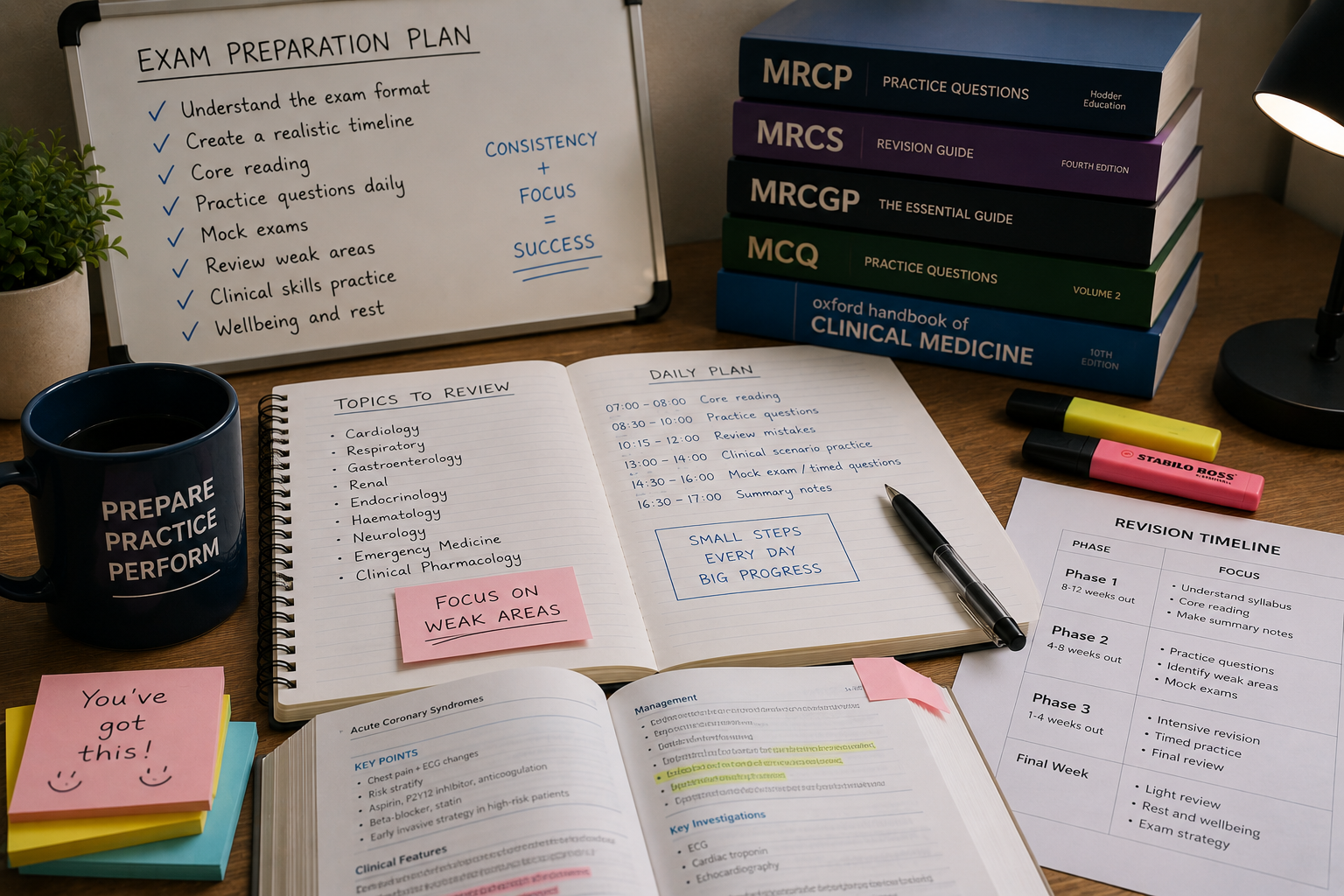
Membership exams are demanding but very passable with a structured plan. This article offers a realistic approach to revision and exam technique.
The membership examinations of the Royal Colleges are an important milestone in the career of almost every UK doctor. Whether preparing for MRCP, MRCS, MRCGP, MRCOG, MRCPCH, FRCA, or another specialty examination, these exams often represent a major hurdle in training. They test not only knowledge, but also clinical judgement, communication, professionalism, and the ability to perform under pressure.
Because of this, successful preparation usually depends less on last-minute effort and more on structure, consistency, and self-awareness. The first step is to understand exactly what the examination requires. Each college has its own format, syllabus, marking system, and style of questioning. Some exams are heavily knowledge-based, while others focus on clinical examination, consultation skills, decision-making, or practical stations. Knowing the format early allows candidates to prepare in a targeted way rather than simply “studying everything”.
A realistic timeline is essential. It is helpful to work backwards from the exam date and divide preparation into phases. The early phase should focus on building core knowledge and understanding the syllabus. The middle phase should involve regular practice questions, past papers, and identification of weak areas. The final phase should become more exam-focused, with timed practice, mock exams, and repeated review of topics that are commonly tested.
Consistency matters. Most candidates benefit from steady revision over several months rather than intense cramming in the final few weeks. Short, regular study sessions are often more effective than occasional long sessions that are difficult to sustain. A good routine might include a core textbook or revision guide, a question bank, notes on recurring mistakes, and scheduled time to revisit difficult topics. The aim is not only to cover material, but to retain it and apply it confidently.
Practice questions are particularly valuable. They help candidates recognise patterns, understand how questions are framed, and identify gaps in knowledge. However, simply completing large numbers of questions is not enough. The real learning happens when mistakes are reviewed carefully. Candidates should ask themselves why they chose the wrong answer, what concept they misunderstood, and how they would recognise the same topic if it appeared in a different form.
For clinical and practical examinations, knowledge alone is not sufficient. Repeated practice with colleagues, seniors, and exam partners is essential. These exams assess structure, timing, communication, confidence, and the ability to think clearly while being observed. A candidate may know the correct diagnosis or management plan, but still lose marks if their approach is disorganised or unclear. Regular mock stations and honest feedback can make a significant difference.
Communication skills should not be neglected. Many membership exams include scenarios involving explanation, consent, breaking bad news, shared decision-making, patient safety, or managing conflict. These stations reward doctors who are clear, empathetic, and structured. Practising aloud is important, because what sounds clear in one’s head may not always come across clearly under exam conditions.
A common challenge is balancing exam preparation with full-time clinical work. Rota gaps, on-calls, family commitments, and fatigue can make revision feel difficult to protect. This is why planning matters. Candidates should be realistic about their available time and avoid creating revision plans that look impressive but are impossible to follow. A sustainable plan that is followed consistently is far better than an ideal plan that collapses after two weeks.
Wellbeing is also part of exam preparation. These exams are demanding, and the pressure to pass can feel intense. Sleep, exercise, proper meals, rest days, and time away from revision are not wasted time. They help maintain concentration, memory, and emotional resilience. Burnout during revision can affect both performance and confidence, so candidates should aim for preparation that is disciplined but humane.
Peer support can be invaluable. Study groups, practice partners, and colleagues sitting the same exam can provide structure, motivation, and reassurance. Teaching each other difficult topics, sharing resources, and practising clinical stations together can make the process feel less isolating. Just as importantly, peers can remind one another that anxiety, setbacks, and difficult practice scores are normal parts of preparation.
Mentorship also has a role. Doctors who have recently passed the same examination often provide the most practical advice: which resources were useful, how much time to allow, what to prioritise, and what they would do differently. Their experience can help candidates avoid common mistakes and focus their energy more effectively.
The Cyprus Medical Society UK can support members through this process by connecting candidates with peers, mentors, study partners, and colleagues who have recently passed Royal College examinations. Sharing resources, organising practice sessions, and offering encouragement are simple but powerful ways the community can help.
Royal College membership exams are challenging, but they are also achievable with the right approach. Structured preparation, regular practice, honest feedback, and sustainable revision habits give candidates the best chance of success. Passing these exams is not only a professional milestone; it is also a moment of growth, confidence, and progression toward the next stage of a medical career.
Written by
Cyprus Medical Society UK Editorial