
Teaching as a Trainee: Growing as a Medical Educator
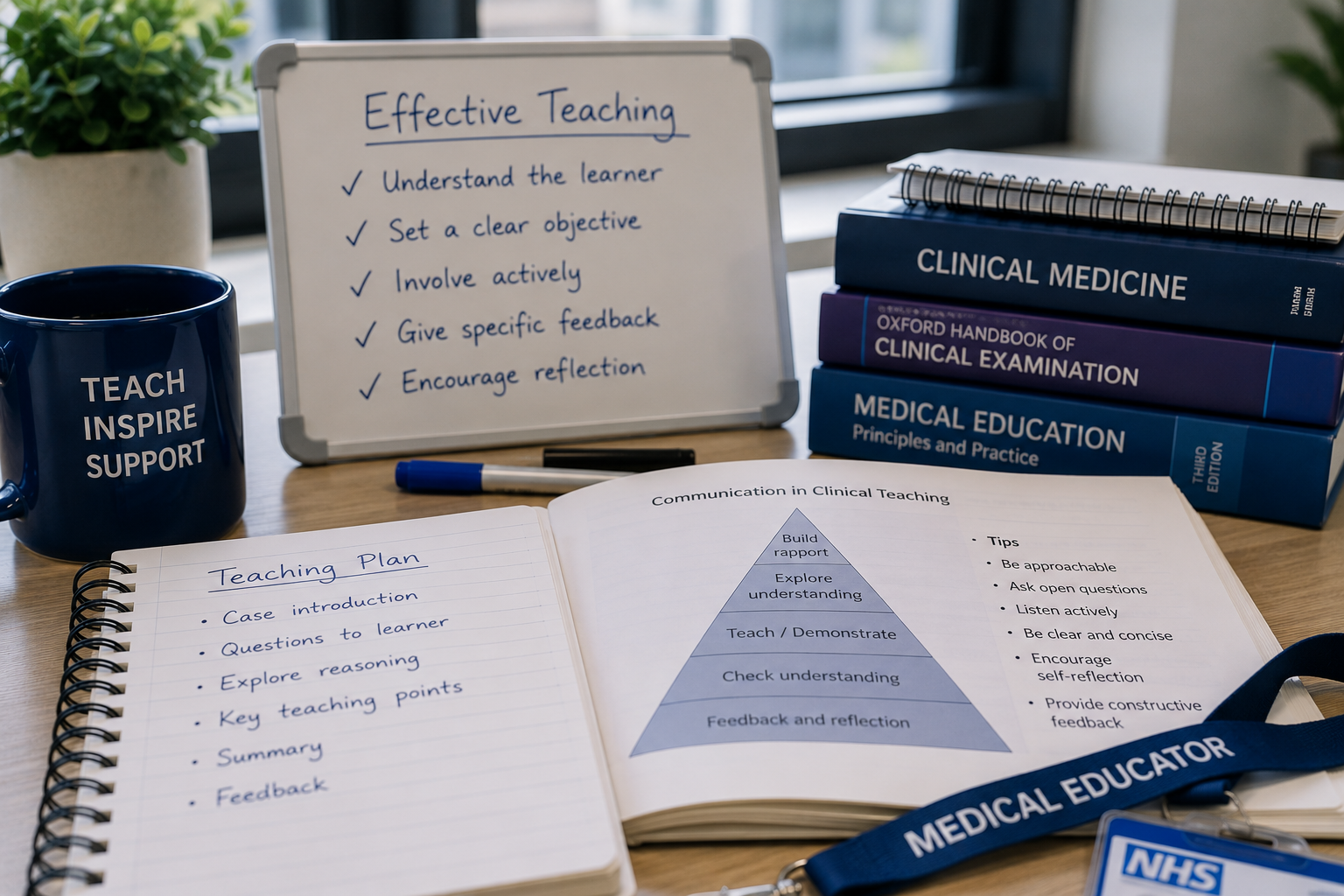
Teaching is a core part of being a doctor. Developing as an educator benefits students, patients, and your own career.
Teaching is woven into everyday clinical medicine. It happens when a doctor explains a diagnosis to a patient, talks a family through a management plan, supervises a medical student on a ward round, supports a junior colleague during a procedure, or presents a case in a teaching session. In that sense, education is not separate from clinical work. It is part of how medicine functions and how standards are passed from one generation to the next.
For trainees, teaching can sometimes feel like an additional responsibility on top of an already busy job. However, it is also one of the most valuable ways to grow professionally. Teaching others strengthens clinical knowledge, improves communication, builds confidence, and encourages reflection on one’s own practice. A topic that feels familiar often becomes much clearer when it needs to be explained simply to someone else.
Good teaching does not require a lecture theatre, a perfect slide deck, or a large amount of protected time. Some of the most useful teaching in medicine happens informally: a five-minute explanation after seeing a patient, a quick anatomy recap before theatre, a discussion about blood results during a ward round, or feedback after a student has presented a case. What matters most is that the teaching is focused, relevant, and pitched at the right level.
Understanding the learner is the starting point. A short conversation can make a big difference: What stage are they at? What have they already seen? What are they hoping to get from the session? A first-year medical student, final-year student, foundation doctor, and core trainee may all need very different things from the same clinical encounter. Taking a moment to establish this helps avoid teaching that is either too basic or too advanced.
Clear objectives are also helpful. Even in a busy clinical environment, it is useful to define a small aim: by the end of this discussion, the learner should be able to recognise red flags in abdominal pain, present a patient clearly, interpret a set of inflammatory markers, or understand the steps of a procedure. Focused teaching is usually more memorable than long, unstructured explanations.
Active involvement makes teaching more effective. Rather than simply talking through a topic, trainees can encourage learners to examine a patient, interpret an investigation, suggest a differential diagnosis, or explain their reasoning. This creates a more engaging learning experience and helps the teacher identify gaps in understanding. It also mirrors real clinical practice, where doctors must apply knowledge rather than simply recall it.
Feedback is one of the most important parts of medical education. It does not need to be harsh or overly formal. The best feedback is specific, balanced, and timely. Saying “your presentation was good” is encouraging, but less useful than saying, “you summarised the key positives clearly, and next time try to include a more structured management plan at the end.” Good feedback helps learners improve while preserving confidence.
Teaching also helps trainees develop skills that are valuable for their own careers. Explaining complex ideas clearly, adapting communication to different audiences, giving constructive feedback, organising sessions, and reflecting on learning needs are all important professional skills. They are relevant not only for those pursuing academic or educational careers, but for every doctor who will supervise colleagues, lead teams, and communicate with patients.
For those who enjoy teaching, formal development can be worthwhile. This might include local teaching programmes, simulation sessions, bedside teaching, student supervision, teaching fellow roles, courses in clinical education, or postgraduate qualifications in medical education. Keeping a teaching portfolio, collecting feedback, reflecting on sessions, and demonstrating progression can also strengthen applications for future posts.
It is important, however, that teaching as a trainee remains realistic. Trainees do not need to know everything before they can teach. In fact, near-peer teaching is often particularly effective because trainees remember what it felt like to learn the same material recently. They can explain things in a way that feels accessible, practical, and relevant to exams or day-to-day clinical work.
The Cyprus Medical Society UK recognises teaching as an important part of professional development and community building. Many Cypriot medical students and doctors in the UK benefit from guidance, teaching, and mentorship from colleagues who are only a few steps ahead of them. By sharing knowledge and opportunities, members can support one another while also developing as educators themselves.
Members are encouraged to contribute where they can: by offering informal advice, organising teaching sessions, sharing resources, supervising students, or helping younger colleagues prepare for exams and applications. These contributions do not need to be large to be meaningful. A short teaching session, a helpful explanation, or a thoughtful piece of feedback can have a lasting impact.
Teaching is one of the most generous parts of medicine. It allows trainees to give back, consolidate their own learning, and help shape the confidence and competence of those coming after them. By developing deliberately as educators, trainees not only improve the experience of learners but also become clearer communicators, safer clinicians, and stronger members of the medical community.
Written by
Cyprus Medical Society UK Editorial