
How Mentorship Shapes the Next Generation of Doctors
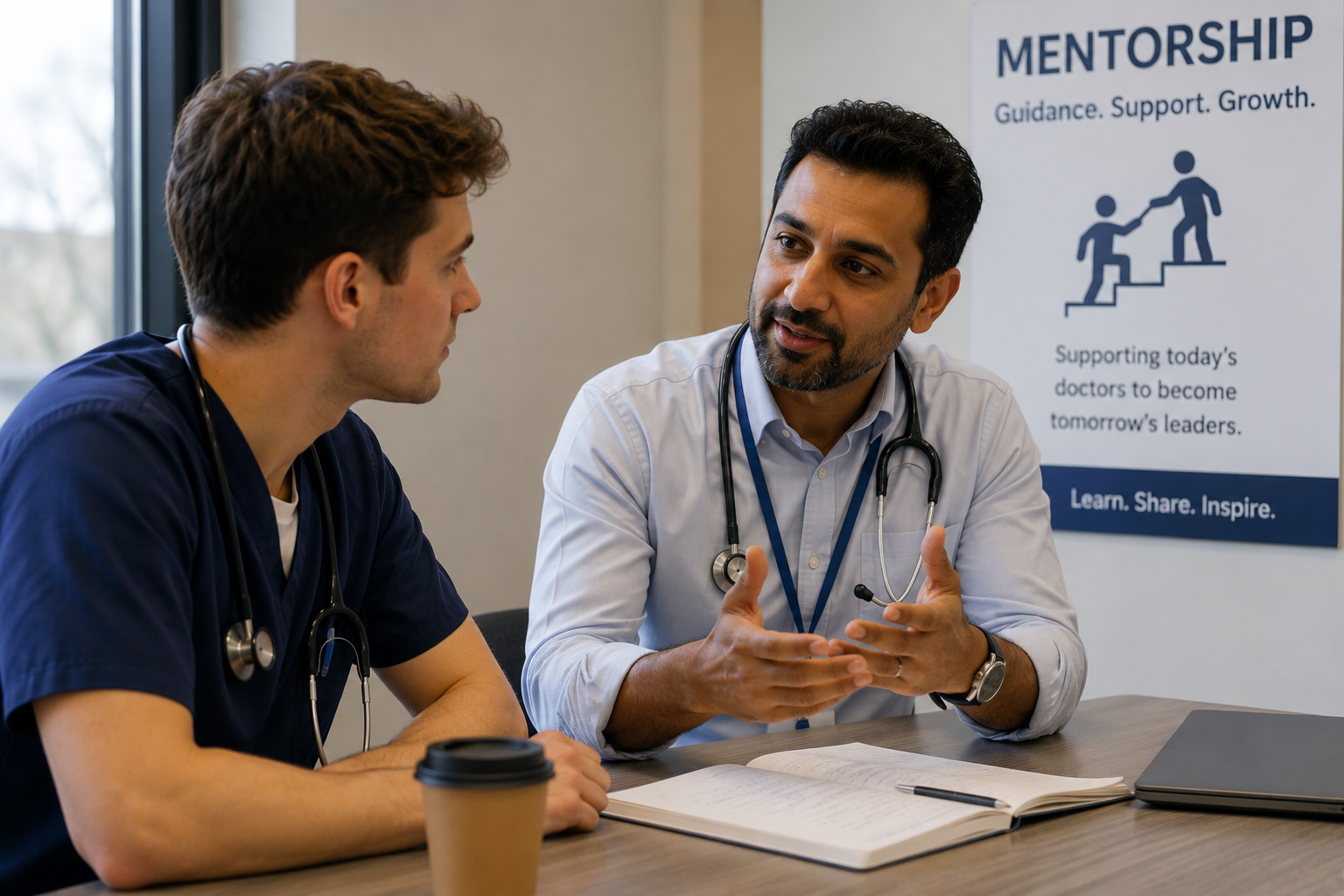
Mentorship changes careers. This article looks at what good mentorship offers and how members can take part.
Mentorship has always been one of the most valuable forms of support in medicine. Clinical knowledge can be learned from textbooks, guidelines, ward rounds, and exams, but professional development often depends on something more personal: guidance from someone who has walked a similar path and is willing to share what they have learned along the way.
A good mentor offers far more than career advice. They provide perspective during difficult periods, encouragement when confidence is low, and honest feedback when growth is needed. They can help a student or junior doctor understand the realities of training, choose between career options, prepare for applications, manage setbacks, and recognise opportunities that may not be immediately obvious.
Medicine can feel overwhelming, especially in the early stages. Students and trainees are often expected to make important decisions about specialties, exams, portfolios, research, audits, leadership roles, and work-life balance before they have had much time to understand the system. In these moments, speaking to someone who has recently faced similar choices can be extremely reassuring. A mentor does not need to have all the answers, but they can help a mentee ask better questions and make more informed decisions.
The best mentorship relationships are built on trust, honesty, and approachability. They do not need to be overly formal or time-consuming. Often, the most helpful conversations are short but meaningful: a check-in before an interview, advice after a difficult rotation, feedback on a CV, or a candid discussion about what a particular specialty is really like. Small moments of guidance can have a lasting effect.
Mentorship is also important because it helps doctors feel less alone. Many challenges in medicine are shared, but they can feel deeply personal at the time. A student worried about not being “good enough”, a foundation doctor unsure about their next step, or a trainee struggling after an unsuccessful application may all benefit from hearing that uncertainty and setbacks are normal parts of a medical career. Sometimes the most powerful thing a mentor can say is, “I have been there too.”
The relationship benefits mentors as well. Supporting a colleague’s development can be deeply rewarding, and it often encourages reflection on one’s own journey. Mentors are reminded of the challenges they have overcome, the advice they once needed, and the responsibility doctors have to support those coming after them. Mentorship strengthens not only individuals, but also the culture of medicine as a whole.
Importantly, effective mentorship does not require seniority alone. Doctors at every stage have something valuable to offer. A medical student may benefit greatly from speaking with a foundation doctor. A foundation doctor may need guidance from a core trainee. A registrar may seek advice from a consultant. Peer mentorship, near-peer mentorship, and formal senior mentorship all have a place. Each offers a different kind of perspective.
For communities such as the Cyprus Medical Society UK, mentorship has an additional value. Many Cypriot medical students and doctors in the UK are navigating training systems, applications, cultural transitions, and career decisions away from home. A strong professional community can make that journey easier by connecting people across specialties, hospitals, and stages of training.
The Cyprus Medical Society UK has developed a mentorship scheme to help create these connections. The aim is simple: to bring together members who are willing to mentor with students, trainees, and doctors who would value guidance. Members are encouraged to indicate on their profile whether they are open to mentoring, looking for a mentor, or both, so that meaningful matches can be made within the community.
Mentorship is not about having a perfect career or presenting a polished version of success. It is about being available, honest, and willing to support someone else’s growth. By sharing experience, offering encouragement, and opening doors for one another, we help shape a more confident, connected, and compassionate next generation of doctors.
Written by
Cyprus Medical Society UK Editorial