
Publishing Your First Paper: A Guide
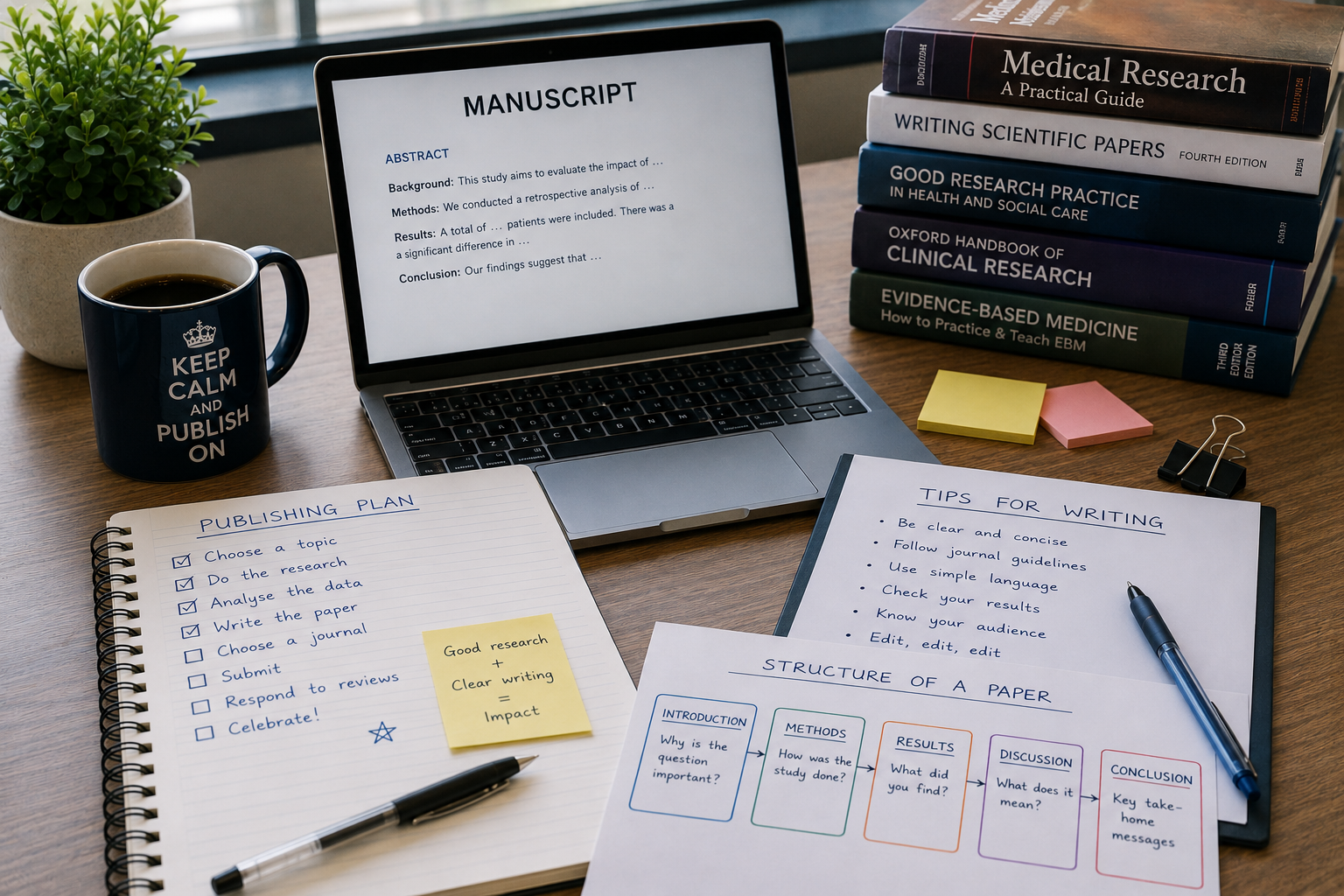
Turning a project into a published paper is a skill in itself. This guide covers choosing a journal, structuring the manuscript, and handling peer review.
Publishing a first paper is an important milestone in a medical career. For many students and junior doctors, it can feel slightly mysterious from the outside: choosing a journal, preparing a manuscript, responding to reviewers, and waiting for decisions can all seem unfamiliar at first. In reality, the process becomes much more manageable when it is broken down into clear steps.
A completed project only reaches its full value once it is shared. Presenting at a meeting or conference is a valuable first step, but publication gives the work a more permanent place in the academic record. It allows others to read, question, build on, and learn from what has been done. Even a small project can be worthwhile if it asks a clear question, uses appropriate methods, and reports findings honestly.
The first decision is choosing the right journal. This should be realistic rather than overly ambitious. A good target journal matches the subject, quality, methodology, and audience of the paper. Before writing, it is worth reading several recent articles from that journal to understand its style, length, structure, and priorities. The author guidance should be checked early, not at the end, as it will usually specify word limits, reference style, figure requirements, reporting guidelines, and how the manuscript should be submitted.
It is also important to avoid journals that are not reputable. Predatory journals may promise rapid publication but often provide poor peer review, high fees, and little academic value. A useful question is: would I be happy for this paper to appear on my CV in five years’ time? If the answer is uncertain, it is worth seeking advice from a supervisor or colleague with publishing experience.
A strong manuscript usually has a clear structure. The introduction should explain why the topic matters, what is already known, and what gap the paper aims to address. It should not be a long textbook-style background. The methods section should be detailed enough for another researcher to understand exactly what was done. This is especially important for audits, quality improvement projects, observational studies, systematic reviews, and case series, where clarity and transparency are essential.
The results section should present the findings without trying to over-explain them. Tables and figures can be very helpful, particularly when they allow the reader to understand the data quickly. The discussion is where the findings are interpreted. This section should explain what the results mean, how they compare with existing literature, what the strengths and limitations are, and what the practical implications may be.
Limitations should be acknowledged honestly. Many first-time authors worry that admitting limitations will weaken the paper, but the opposite is usually true. Editors and reviewers expect limitations. A manuscript that recognises them clearly often appears more thoughtful and trustworthy than one that overstates its conclusions.
Good academic writing is usually plain and precise. Long sentences, unnecessary jargon, and overly complex phrasing rarely improve a paper. The aim is not to sound impressive, but to make the work easy to understand. Clear writing reflects clear thinking. Before submission, it is worth reading the manuscript aloud, removing repetition, checking that each paragraph has a purpose, and making sure the main message is obvious.
Authorship should be agreed early. Everyone listed as an author should have made a meaningful contribution to the work and should approve the final manuscript. It is much easier to discuss authorship at the beginning of a project than after the paper is written. Supervisors can also advise on ethical approval, audit registration, patient consent, data handling, and the correct reporting standards for the type of study.
Submission is not the end of the process. Peer review can feel uncomfortable, especially the first time. Reviewer comments may be detailed, critical, or occasionally discouraging. However, most reviews improve the final paper. The best approach is to respond calmly, point by point, and in full. Where changes are made, they should be clearly described. Where the authors disagree, the response should remain polite and evidence-based.
Rejection is also part of academic publishing. Many good papers are rejected before they find the right journal. A rejection does not necessarily mean the work has no value. It may mean the journal was not the right fit, the priority was too low, or revisions are needed before submitting elsewhere. Persistence matters. Each round of feedback can make the paper stronger.
For students and junior doctors, publishing a first paper is also a learning experience. It teaches project management, scientific writing, critical appraisal, teamwork, patience, and resilience. These skills are useful far beyond the publication itself. They strengthen future research, improve applications, and build confidence in contributing to academic medicine.
The Cyprus Medical Society UK encourages members to support one another in developing academic skills. Members with publishing experience can advise on journal choice, manuscript structure, authorship, peer review, and responding to reviewers. Newer colleagues should not feel that they need to navigate the process alone.
Publishing your first paper can feel daunting, but it is achievable with the right guidance and persistence. Start with a clear question, choose an appropriate journal, write simply, report honestly, respond professionally, and keep going if the first answer is no. Every published paper begins with someone deciding that their work is worth sharing.
Written by
Cyprus Medical Society UK Editorial